


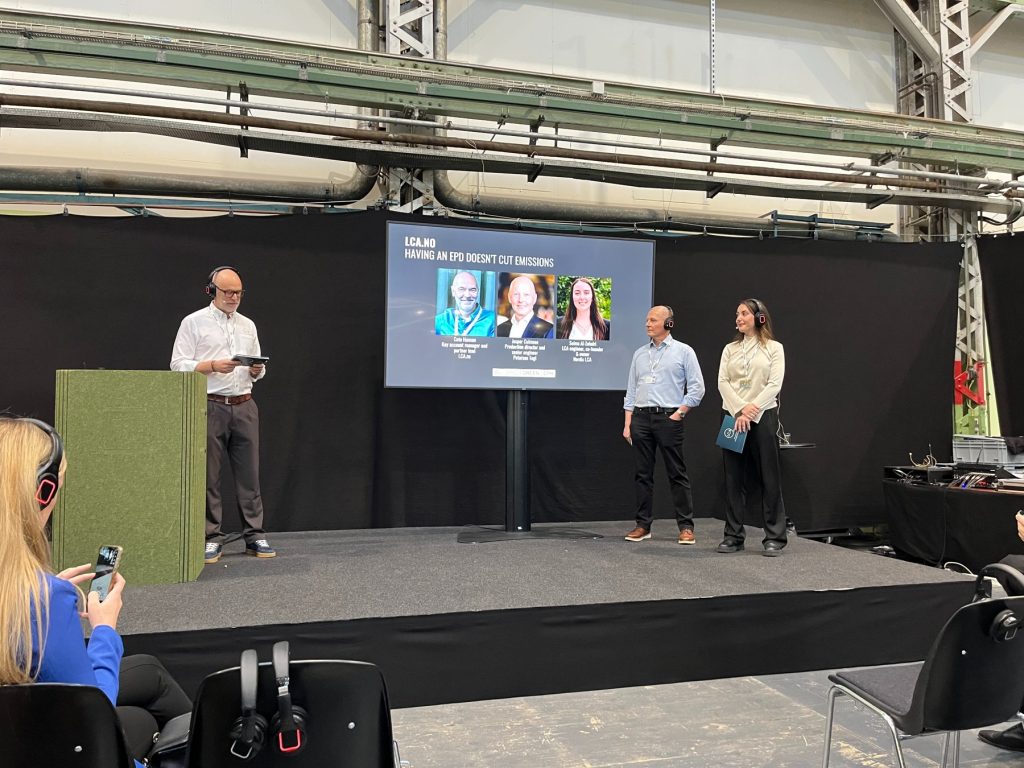
Stricter climate requirements are making verified environmental documentation increasingly important in the Danish construction market. At Building Green in Copenhagen, LCA.no put the spotlight on the next step: How can manufacturers use environmental data to develop better products and prioritise their investments?
An EPD documents a product’s environmental impact. Its value increases when the manufacturer uses the data behind the documentation to understand what drives emissions, assess alternatives and identify improvements.
This was the core of LCA.no’s contribution at Building Green, where Cato Hansen, Key Account Manager and Partner Lead, took part together with Selma Al-Zohairi, LCA Engineer, Co-founder and Owner at our partner Nordic LCA, and Jesper Culmsee, Production Director and Senior Engineer at Petersen Tegl.
Environmental data challenges assumptions
Petersen Tegl shared an example from its own operations: a comparison of two seemingly similar raw materials gave different results than expected. The example showed why material choices should be based on actual data, and how life cycle assessments can reveal differences that are otherwise easy to overlook.
For manufacturers, such insight can provide a better basis for prioritising development work and investments. Which raw materials contribute most to the environmental impact? Where should production be improved? And which measures have the greatest effect?
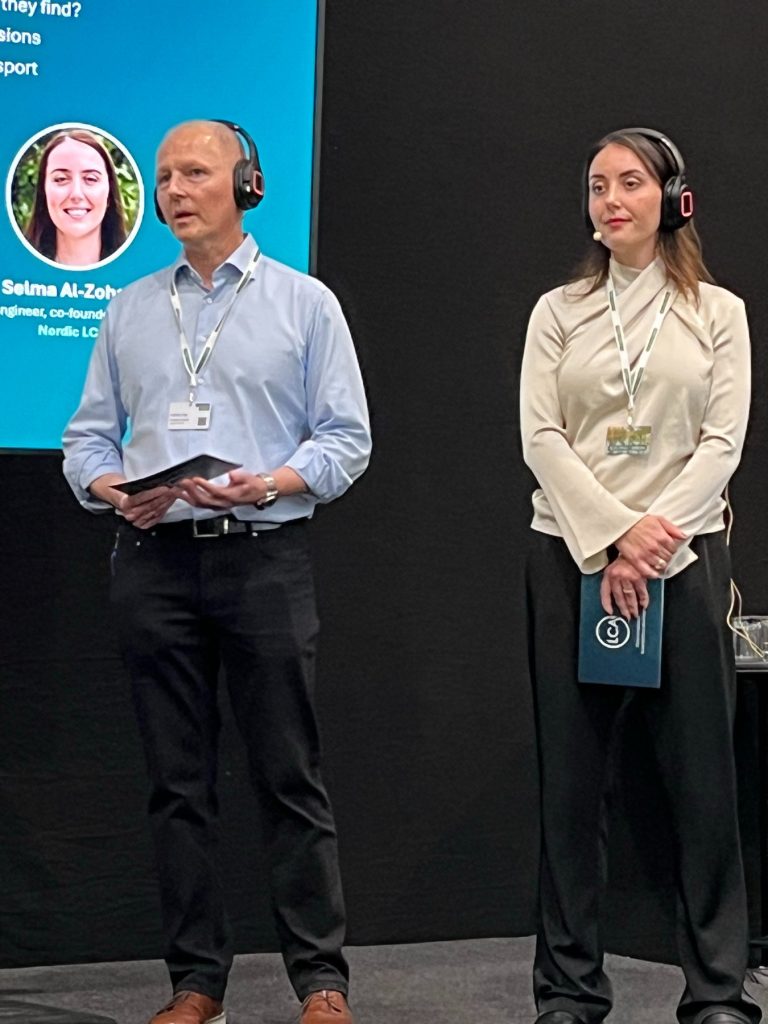
“An EPD documents the environmental impact of a product. But having this documentation does not automatically lead to lower emissions. The real opportunity arises when manufacturers start using the data to understand their products, challenge their own assumptions and make better decisions,” says Cato Hansen.
Danish climate requirements increase the value of precise data
Denmark tightened the climate requirements in the BR18 building regulations from 1 July 2025. More types of buildings are covered, and the limit values vary by building type. This makes the documented climate impact of materials more important in both design and procurement.
Product-specific EPDs give consultants and developers a more precise basis for a building’s climate calculation than generic data. For manufacturers, this means that product improvements must also be documented if they are to add value in customers’ calculations and material choices.
Facts: Climate requirements in Denmark
- Denmark tightened the climate requirements in the BR18 building regulations from 1 July 2025.
- More types of buildings are covered, and the limit values vary by building type.
- Product-specific EPDs provide a more precise basis for a building’s climate calculation than generic data.
- Danish small and medium-sized enterprises can apply for support to get started with systematic sustainability work through Virksomhedsprogrammet and Erhvervshusene. Read more about the support scheme.

“One thing was particularly clear: EPD is no longer a topic for specialists. It is becoming increasingly important for manufacturers’ market position, product development and business decisions,” says Cato Hansen, Key Account Manager and Partner Lead at LCA.no.
From individual projects to systematic work
In our conversations with manufacturers, several challenges came up again and again: increasing documentation requirements, access to reliable data and the need to keep EPDs up to date across products and production sites.
When documentation is handled as separate projects, the work quickly becomes resource-intensive. A more systematic approach makes it easier to reuse data, track changes and use the knowledge in product development. Structured product data also provides a better starting point for upcoming Digital Product Passports.
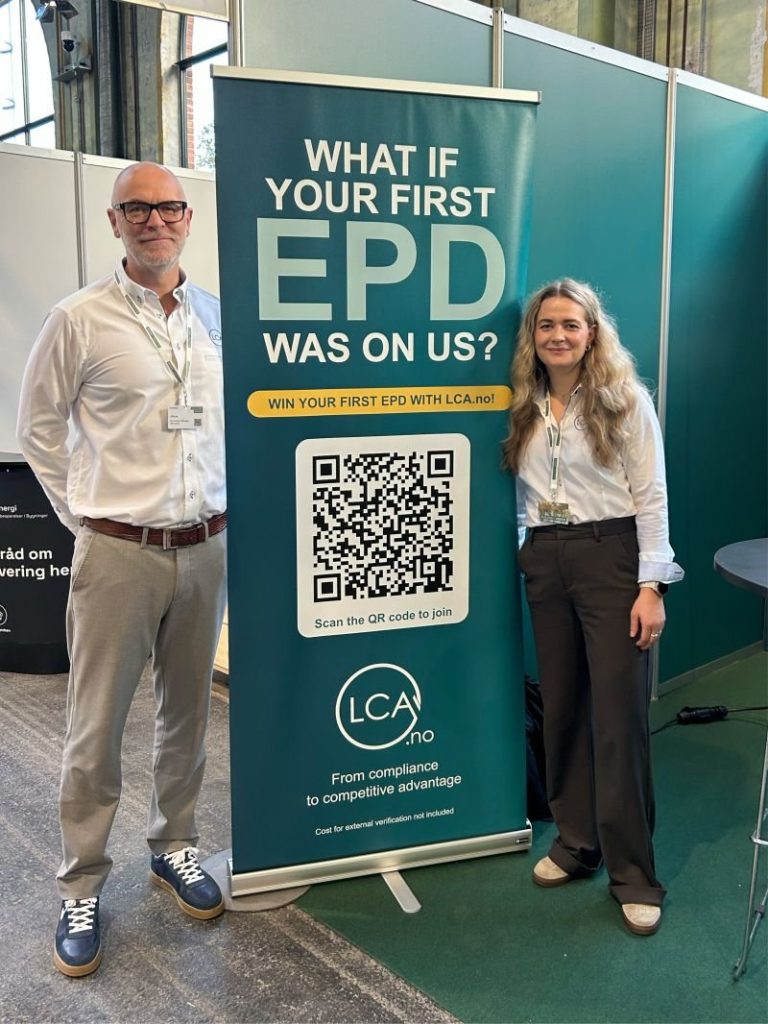
Through LCA Tools helps manufacturers structure production data and streamline their work with EPDs. The goal is for the documentation to be useful both for the customer choosing materials and for the manufacturer improving them. Stricter requirements also bring the need for verified data and automated processes for developing EPDs.
Would you like to know how the environmental data behind your EPDs can lead to better decisions in your business? Book a conversation with us.
Bjørn Flagestad, Key Account Manager at LCA.no, is the contact person for customers in the Nordics. Book a meeting with him here.