


Requirements for climate documentation are increasing rapidly in the construction and aggregates industry. For Gunnar Holth Grusforretning AS (GHG), this has not only been about regulatory compliance, but about building competence, streamlining operations and strengthening competitiveness. With extensive industry experience—and as an active contributor within Norsk Bergindustri—the company has been closely involved in the development of standards, practices and tools. In collaboration with LCA.no, EPD work has become a core part of the business.
An industry undergoing rapid change
The demand for documented emissions has grown dramatically since 2019. Where public and private developers previously requested environmental data, documentation is now a clear competitive parameter.
– The demand has increased enormously. Customers want data on everything—whether we supply from our own quarries, crush materials for others, or take part in major infrastructure projects, says Bjørn Ottar Ramstad, HSE and Environmental Manager at Gunnar Holth Grusforretning AS.
Customers no longer ask only for declarations of finished products, but also for emissions data related to machinery, production lines and processing methods. This affects both daily operations and long-term planning of new production facilities.
Early involvement and a central role in shaping industry standards
Gunnar Holth Grusforretning has worked with EPDs since the aggregates industry first began developing common systems and standards through Norsk Bergindustri, where Ramstad serves on the Environmental Committee.
– The EPD work in our industry started in 2019, and I have been involved from day one. When the collaboration with LCA.no began, this was pioneering work for both of us, Ramstad explains.
The work included the development of PCRs, adaptation of the EPD generator to the aggregates industry, and establishment of routines for data collection.
– We were early adopters and worked closely with LCA.no to get this right from the outset. That collaboration has been both educational and crucial, he adds.
The result is a company that not only helps shape industry practices, but also holds a high level of in-house expertise.
– It’s not uncommon for competitors to call us for advice. That says something about how far we have come, says Ramstad.
From data collection to operations: the EPD generator in practice
GHG uses LCA.no’s EPD generator for both standard EPDs and project-specific calculations. Today, the company has around ten published EPDs, in addition to a large number of project-specific EPDs and internal analyses.
– I have produced around 65 project EPDs, as well as numerous internal analyses. The generator provides the data we need, whether we are supplying major public projects or smaller contractors, says Ramstad.
The use of the tool goes beyond documentation—it also serves as strategic decision support.
Analysis tools: turning insight into action
GHG actively uses the analysis functions in the generator to compare production lines, assess alternative solutions, and identify what delivers the lowest emissions and best profitability.
– We have used the analyses to compare different production setups and clearly see what pays off. When you dive deep into the details and involve both managers and operators, it creates a completely different level of awareness across the organisation. Everyone can see what actually drives the emissions, says Ramstad.
This insight has changed how the company operates—both on a day-to-day basis and at a strategic level.
Energy, machinery and on-site realities
In production processes where energy use is a major impact factor, GHG works systematically to reduce emissions.
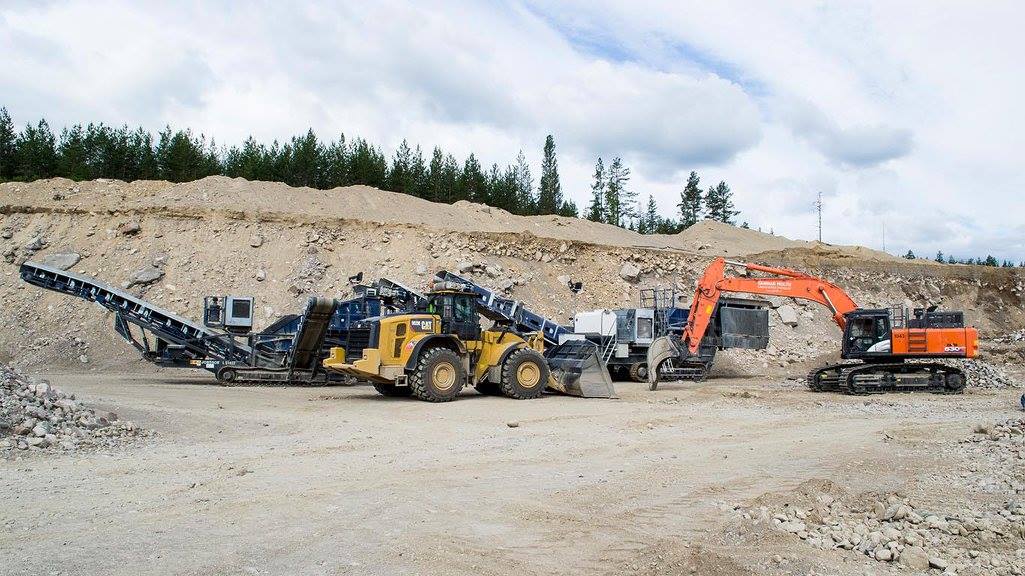
One of the most important measures has been the transition to newer machinery with significantly lower energy consumption.
– We see a huge improvement in energy use with new machines compared to models that are only three years old. This is clearly reflected in the emissions data, Ramstad explains.
However, infrastructure remains a challenge.
– In many locations, we could operate on electricity, but access is limited. There simply isn’t enough grid capacity. Schools and other critical infrastructure are prioritised, and we have to rely on diesel even when we have hybrid equipment, he says.
At the same time, the company is monitoring developments in battery-electric machinery, though technology and charging infrastructure are not yet sufficiently mature.
Digitalisation: a rapidly evolving industry
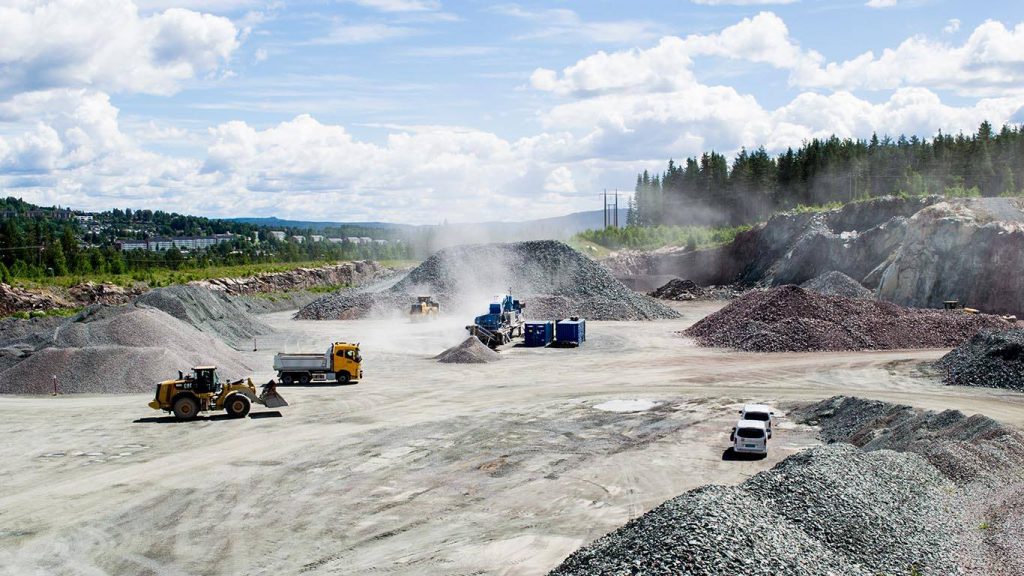
GHG already collects real-time data directly from machinery suppliers such as Volvo and CAT, as well as from crushing and screening equipment. This provides detailed data on production volumes, energy use and machine load.
– Both suppliers have developed platforms that allow us to extract data directly. Over time, this will make it possible to automate much more of the data flow into third-party tools, says Ramstad.
At the same time, digital EPDs are becoming increasingly important in collaboration with contractors.
– We integrate EPDs directly into their systems, for example at Skanska. This makes the documentation both transparent and useful in project execution, he explains, adding:
– Eventually, the environmental footprint per tonne will be included as part of the invoice and can be read digitally when customers receive it.
Competitive advantage—and a clear message to the industry
In major tenders, low and well-documented emissions provide a clear advantage.
– You don’t really have a choice. If you want to supply the state, counties or major private developers, you must have the documentation in place. Customers ask for emissions data before you even know whether you will be invited to price a project, says Ramstad.
For GHG, this has resulted in a position as both supplier and industry reference.
– When it comes to climate documentation in the aggregates industry, it almost feels like we’re playing in the Champions League. We’re at the top level, and we notice it from all the enquiries we receive. Other players reach out almost weekly—they know how far we’ve come and want to learn. It’s encouraging, and it shows that our competence really matters, he says.
His advice to others in the industry is clear:
– This is not something you can do as a side task. You need a dedicated person who is truly committed to it. Otherwise, it will never be done properly, Ramstad concludes.